Chapter 1. Education and the NCIDQ | Entry 1.2
The NCIDQ exam in 2026: the three sections, the fees, the eligibility hours, the scoring and the annual renewal
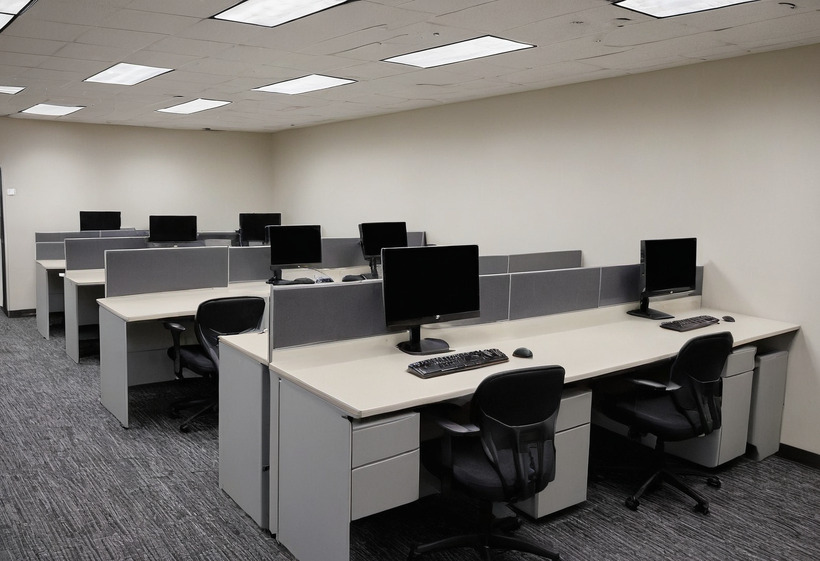
The NCIDQ Certificate is the credential that 30 US states, Washington DC, Puerto Rico and the Canadian provinces write into their interior design laws. Earning it in 2026 means passing three computer-delivered sections (IDFX, IDIX and IDPX) within ten exam administrations, paying $235 to apply and $1,140 in section fees, and documenting between 3,520 and 7,040 hours of supervised work.
What is the NCIDQ exam and who administers it?
The NCIDQ exam is a three-section certification examination for interior designers developed by the Council for Interior Design Qualification (CIDQ), a body founded in 1974 and made up of regulatory boards from the United States and Canada, and delivered by Prometric at more than 8,000 test centers in 180 countries and through its ProProctor remote platform. The CIDQ Annual Report 2025 states that more than 39,000 people have earned NCIDQ Certification to date and that 17,429 certificate holders were active on November 3, 2025.
The three sections are the Interior Design Fundamentals Exam (IDFX), the Interior Design Implementation Exam (IDIX, which replaced the Practicum or PRAC section beginning with the April 2026 administration) and the Interior Design Professional Exam (IDPX). The 2026 blueprints assign each section a design phase: IDFX covers programming, conceptual design and schematic design; IDIX covers design development and construction documentation; IDPX covers construction administration and project management. All three are weighted toward health, safety and welfare content.
Key figure: 17,429 active NCIDQ Certificate holders on November 3, 2025; 6,448 exam registrations and 485 new certificates in spring 2025 (CIDQ Annual Report 2025).
How are the IDFX, IDIX and IDPX sections structured in 2026?
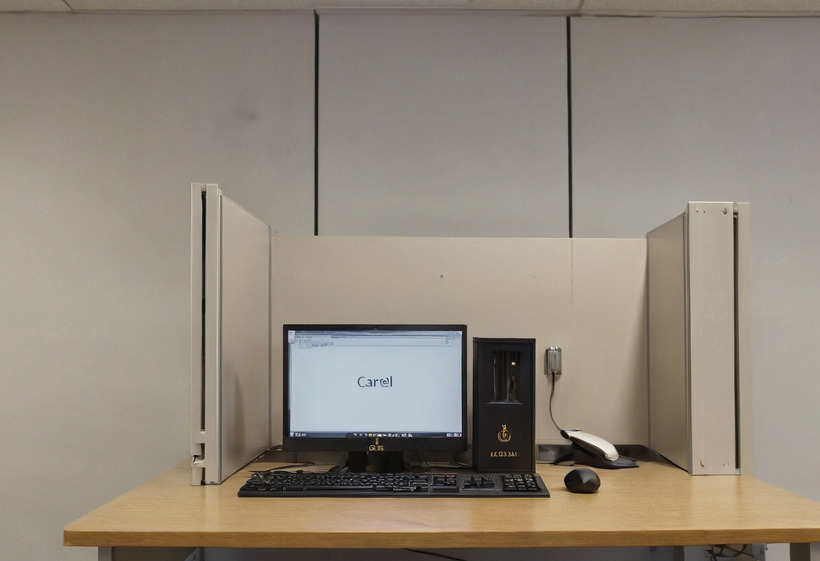
IDFX contains 115 questions in 3 hours, IDIX contains 130 questions in 4 hours, and IDPX contains 115 questions in 3 hours, with 15 unscored pre-test questions inside each count and four item types (three- and four-option multiple choice, drag and place, fill in the blank, hot spot), according to the exam overview in the NCIDQ Candidate Handbook 1225. The appointment in the Prometric confirmation runs 30 minutes longer than the exam to cover check-in, the confidentiality statement, a tutorial and an end-of-exam survey.
| Section (2026) | Questions | Scored | Time | Design phases covered |
|---|---|---|---|---|
| IDFX Fundamentals | 115 | 100 | 3 hours | Programming, conceptual design, schematic design |
| IDIX Implementation | 130 | 115 | 4 hours | Design development, construction documentation |
| IDPX Professional | 115 | 100 | 3 hours | Construction administration, project management |
The 2026 IDFX blueprint published by CIDQ divides the section into six content areas: Existing Conditions 14%, Pre-Design 15%, Programming 16%, Space Planning 19%, Preliminary FF&E and Finishes 16%, and Schematics 20%. CIDQ's blueprint FAQ (document 0225) confirms three further changes for 2026: the IDIX no longer contains case studies but all three sections use scenario-based vignettes with three to five questions each; the Professional Development and Ethics domain and business-structure questions were removed; and the code document supplied during the exam references the 2021 International Building Code and the related 2017 accessibility standard, with BOMA square-footage methods dropped.
Candidates may take the three sections in any order. CIDQ notes that a candidate who wants to follow the design phases would sit IDFX, then IDIX, then IDPX. A section passed under the 2025 blueprint does not have to be retaken after the 2026 change as long as the application remains active.
Who is eligible to sit the NCIDQ exam and how many work hours are required?
Eligibility requires an interior design or architecture education that includes 60 semester or 90 quarter hours of interior design coursework, plus 3,520 to 7,040 hours of work experience verified by a direct supervisor or sponsor, with the exact hours set by the degree type in the handbook's eligibility chart. The CIDQ eligibility page describes the two application routes: Route 1 for candidates who already meet both requirements, and Route 2 in two parts for students and graduates who do not yet have the hours.
| Route (Handbook 1225) | Who applies | Sections | Time to pass |
|---|---|---|---|
| Route 1 | Education and hours complete | IDFX, IDIX, IDPX | 10 exam administrations (about 5 years) |
| Route 2, Part 1 | Final-year bachelor's or master's students, graduates without hours | IDFX only | 4 exam administrations (about 2 years) |
| Route 2, Part 2 | Route 2 candidates once hours are verified | IDIX, IDPX | 10 exam administrations after advancing |
Three details in the handbook trip up career changers. First, the work hours must be verified by a Direct Supervisor or Sponsor, and CIDQ recommends quarterly meetings by phone, video or in person; email-only contact is not accepted. Second, up to 1,760 hours earned before graduation count toward the total. Third, candidates who cannot document the minimum education can apply through the Alternative Review Program with at least 8,800 hours (about five years) of interior design work experience; the ARP application fee is $605 on top of the $235 application fee. The degree side of the equation, including which programs CIDA accredits, is explained in the article on CIDA-accredited interior design programs.

What does the NCIDQ exam cost in 2026?
A Route 1 candidate pays a $235 application fee plus $305 for IDFX, $470 for IDIX and $365 for IDPX, a first-attempt total of $1,375, while a Route 2 candidate pays $100 to apply for IDFX and $150 to apply for IDIX and IDPX, a total of $1,390 with the same section fees. The handbook's fee tables state that all fees are payable in US dollars by credit card through the MyNCIDQ account, that application fees are non-refundable, and that section fees are paid during the scheduling window for the administration the candidate intends to take.
| Fee (NCIDQ Handbook 1225) | Amount | Note |
|---|---|---|
| Application, Route 1 | $235 | Non-refundable |
| Application, Route 2 Part 1 | $100 | IDFX only |
| Application, Route 2 Part 2 | $150 | IDIX and IDPX |
| IDFX section | $305 | Per attempt |
| IDIX section | $470 | Per attempt |
| IDPX section | $365 | Per attempt |
| Reschedule (5 to 30 days before) | $30 | Paid to Prometric |
| Cancellation | $100 | Per exam, deducted from refund |
| ARP application | $605 | Plus the $235 application fee |
| Replacement certificate | $35 | Through MyNCIDQ |
Retakes cost the full section fee again, so a candidate who fails IDIX once spends $470 more. Cancellations are not accepted within five days of the appointment except for documented medical or personal emergencies, which are refunded minus the $100 fee when the form arrives within 10 days of the scheduled appointment.
Key figure: $1,375 for a Route 1 candidate who passes every section on the first attempt ($235 application plus $305, $470 and $365 section fees), before study materials and travel.
When is the exam offered and what are the deadlines?
The exam is offered twice a year, April 1 to 30 and October 1 to 31, with spring applications accepted from August 1 to January 31 and fall applications from February 1 to July 31, and with section fees paid and appointments scheduled between January 3 and March 31 for spring or July 1 and September 30 for fall. Applications are reviewed within 10 business days of submission, and a complete, paid application must arrive by 11:59 pm Eastern on the deadline date.
An approved application starts the eligibility clock at the next administration. The handbook therefore advises candidates not to apply until they are ready to begin testing, because the ten-administration window (Route 1) or four-administration window (Route 2, Part 1) runs regardless of whether the candidate sits.
- Create a MyNCIDQ account and upload an official transcript.
- Enter each position held, with hours, and have the supervisor or sponsor verify it.
- Pay the application fee and submit before January 31 (spring) or July 31 (fall).
- Receive the decision within 10 business days.
- Pay section fees and book Prometric appointments in the scheduling window.
- Test in April or October; official scores post within six weeks of the window closing.
How is the NCIDQ exam scored and what are the pass rates?
Each section is scored by computer and reported on a scale from 200 to 800 with the passing point at 500, and the cut score is fixed by a Standard Setting Meeting of NCIDQ Certificate holders using the Modified Angoff Method and approved by the CIDQ Board, so the passing point does not move with the number or performance of candidates. The handbook states that official results for all three sections are processed within six weeks of the testing window, that the score report shows a scaled score and a breakdown by content domain, and that preliminary results were suspended for spring 2026 because the new blueprints required a new passing point.
CIDQ's current pass-rate page was not retrievable when this article was written. The most recent official figures the editorial team could retrieve appear in a CIDQ exam overview presentation hosted by ASID, which reports the 2019 administrations: IDFX 2,107 exams with a 65% pass rate, IDPX 1,988 exams with 61%, and PRAC 1,675 exams with 63%. Those figures predate both the 2021 and 2026 blueprint changes and should be read as historical.
The CIDQ Annual Report 2025 gives the 2025 volume: 1,908 approved applications, 6,448 exam registrations and 485 new certificates awarded in the spring cycle. The same report distributes the 17,429 active certificate holders by location, with Texas at 1,540, California at 1,251, Florida at 1,017, New York at 832, Ontario at 823 and Illinois at 757.
What does it cost to keep the NCIDQ Certificate active?
An active certificate requires an $85 annual renewal fee paid in April or October depending on the date of exam passage, either the continuing education required by the holder's state or provincial board or, for holders in unregulated jurisdictions, 5 hours of health, safety and welfare continuing education per year, and agreement to the NCIDQ Appellation Agreement and Code of Ethics. The certificate renewal page adds a 30-day grace period after expiration and a further $85 reinstatement fee after that; the handbook's fee table lists certificate reinstatement at $170 per year.
Certificate holders who join a membership body get a direct discount: CIDQ's page for new certificate holders states that ASID waives the first year of professional dues for new NCIDQ holders and that IIDA members may apply to the NCIDQ Tuition Reimbursement Fund. The dues themselves, $549 per year at ASID and $599 per year at IIDA in 2026, are compared in the article on ASID and IIDA membership and software costs.
The certificate is not a license. Florida, Louisiana, Nevada, Washington DC and Puerto Rico each add their own application, fee and renewal cycle on top of the NCIDQ, and the title-act states require registration before a designer may use "Registered" or "Certified Interior Designer." The handbook's guide to interior design license requirements by state lists the boards, the fees and the renewal dates.
Short answers
- How much does the NCIDQ exam cost in total?
- Under Route 1 the NCIDQ Candidate Handbook 1225 lists a $235 application fee plus section fees of $305 (IDFX), $470 (IDIX) and $365 (IDPX), a total of $1,375 if every section is passed on the first attempt. Route 2 splits the application into $100 for IDFX and $150 for IDIX and IDPX, so the total rises to $1,390.
- How many questions are on each NCIDQ section?
- IDFX has 115 questions in 3 hours, IDIX has 130 questions in 4 hours, and IDPX has 115 questions in 3 hours. Each count includes 15 unscored pre-test questions. All three use multiple choice, drag and place, fill in the blank and hot spot items.
- What is the passing score on the NCIDQ exam?
- Each section is reported on a scaled range from 200 to 800 and the passing point is 500. The cut score is set by NCIDQ Certificate holders using the Modified Angoff Method and approved by the CIDQ Board of Directors; it does not change with the number of candidates.
- How many work hours do I need before the NCIDQ exam?
- 3,520 hours (two years full-time) after a bachelor's or master's degree in interior design with 60 semester credit hours, 5,280 hours after an associate degree, certificate or a degree in another major plus an interior design certificate, and 7,040 hours after an architecture degree. Up to 1,760 hours may be earned before graduation.
- When is the NCIDQ exam offered?
- Twice a year: April 1 to 30 for the spring administration and October 1 to 31 for the fall administration. Spring applications are accepted August 1 to January 31 and fall applications February 1 to July 31.
- How many people hold the NCIDQ Certificate?
- The CIDQ Annual Report 2025 counted 17,429 active NCIDQ Certificate holders on November 3, 2025, with 1,908 approved applications, 6,448 exam registrations and 485 new certificates awarded in the spring 2025 cycle. More than 39,000 people have earned the certificate since 1974.